Who It's For — Junk Removal
The Pallet Business for Junk Removal Companies
You are already encountering pallets. They are behind the retail strips you service, stacked beside the dumpsters at the warehouses that call you, and riding in your truck to the transfer station where you pay to drop them.
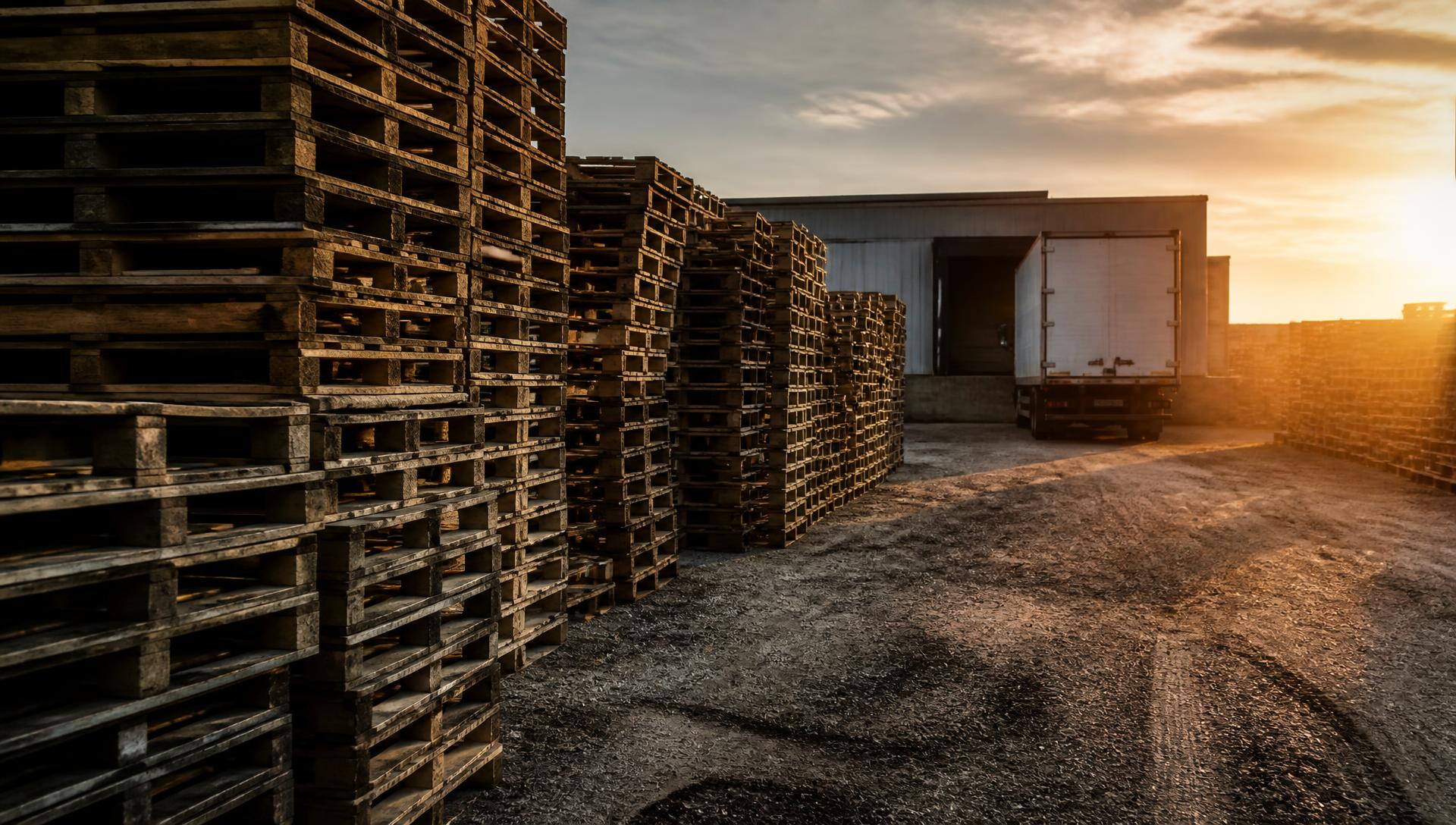
You may be paying to dispose of a product
Junk removal is one of the only businesses that touches pallets constantly and treats every one of them the same way: as weight to dump. Some of those pallets are damaged and genuinely are waste. Others are standard sizes in usable condition that other businesses buy.
Learning to tell the difference on sight is a short skill to acquire and it changes two numbers at once — what you pay in disposal fees and what you can potentially recover.
What junk removal owners typically learn first
- How to identify usable pallets in seconds: size, stringer condition, deck boards, stamps.
- Which sizes have real demand and which are hard to move.
- How to find and qualify local pallet buyers before you start separating stock.
- How to store and stage pallets without wrecking your yard or your workflow.
- How to talk to commercial clients about scheduled pallet removal rather than ad-hoc hauls.
Commercial pallet removal as a service line
Facilities want pallets gone on a schedule, not whenever someone remembers to call. That is a service, and it is a service you are already structured to deliver. Presented properly, pallet removal can become a reason for a commercial client to put you on a recurring schedule instead of calling three vendors.
It also opens the door to the rest of the relationship. The company that reliably handles the pallets is often the company that gets called for everything else.
Frequently asked questions
Do I have to change my business to add pallet services?
No. Most owners start by changing how they sort what they are already picking up, then decide whether to pursue dedicated pallet accounts once they understand the local market.
Are all pallets worth money?
No. Broken, non-standard, wet or contaminated pallets often cost more to handle than they return. Knowing which is which is the whole point of learning grades.