Start Here
How to Start a Wood Pallet Business
This page is written for the person who has heard the pallet business is real, has no idea how it actually works, and does not want to waste six months learning by trial and error. Read it top to bottom and you will understand the shape of the industry before you spend a dollar.
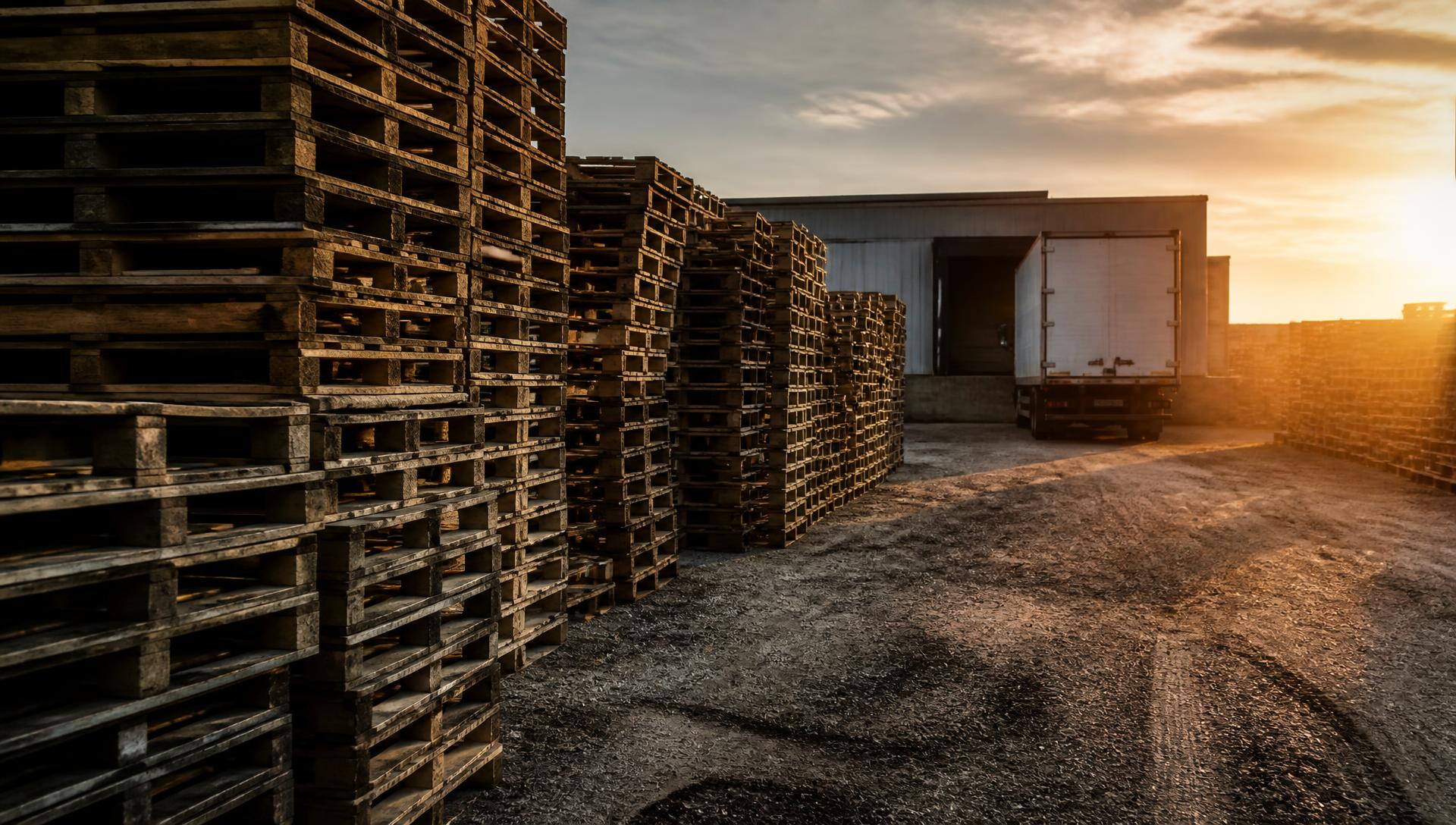
How the wood pallet business actually works
Pallets move goods. Every warehouse, plant and distribution center in the country either accumulates pallets it does not need or consumes pallets it must replace. The business exists in the gap between those two groups.
An operator sources pallets from businesses that have a surplus, sorts and grades them, then sells or delivers them to businesses that need them. Some operators also repair, some only haul, some only broker. All of it starts with knowing which businesses near you are on which side of that gap.
Where pallets come from
- Distribution centers and big-box receiving docks
- Importers and freight consolidators
- Food and beverage plants
- Retail strips, grocery and building supply
- Manufacturers with inbound-heavy operations
- Other haulers, recyclers and junk removal companies
Who buys pallets
- Manufacturers shipping finished product
- Co-packers, growers and exporters
- Third-party logistics providers
- Pallet recyclers and sort yards buying in volume
- Local businesses needing small, steady quantities
What you need to learn before you start
The order matters. Most beginners start by collecting pallets and then look for buyers. That is backwards, and it is why so many people end up with a yard full of stock they cannot move.
Learn your buyers first. Learn what they want, what sizes and grades they accept, and what they pay. Then go find supply that matches the demand you have already verified.
- Pallet sizes, grades and condition terminology
- Local market research: who generates and who consumes
- Pricing structure and what drives it
- Transportation cost per load with your equipment
- How to approach a business professionally
A realistic first 30 days
- Week 1 — learn the product: sizes, grades, stamps, condition.
- Week 2 — map your market: list generators and consumers within your radius.
- Week 3 — make contact: professional outreach, ask questions, take notes.
- Week 4 — run a small, controlled first transaction and record every real cost.
Frequently asked questions
How much money do you need to start a pallet business?
It varies widely based on whether you already own transportation, whether you need storage, and how much inventory you buy up front. Many people start with transportation they already own and small transactions. We teach you to build your own number rather than repeat someone else's.
Is the pallet business the same as flipping Amazon return pallets?
No, and the difference matters. We teach the wood pallet business: used pallets, pallet recycling, pallet pickup and delivery, and commercial pallet supply. We do not teach liquidation or merchandise pallet reselling.
Do I need a truck to start?
You need a way to move pallets. That can be a pickup and trailer, a box truck, a flatbed, or a hauling partner. Transportation shapes what kind of work you can take on, so it is one of the first constraints to plan around.
How long before it becomes a real business?
That depends on your market, your effort and how quickly you build recurring accounts. There is no guaranteed timeline and anyone who gives you one is selling you something.